

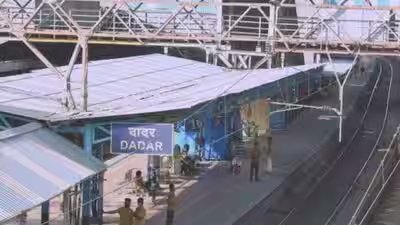

MUMBAI: For generations of Mumbaikars, Dadar has been more than a railway station. It is a landmark that connects the island city with its northern suburbs, a neighbourhood steeped in history and a place closely associated with Dr Babasaheb Ambedkar. Now, a “communication error” over the proposed renaming of Dadar has once again brought its past and identity into focus.The Maharashtra government’s announcement on Wednesday that Dadar railway station would be renamed Chaityabhoomi sparked reactions across the city. However, the chief minister’s office clarified a day later that the proposal was for Dadar Metro station and not the suburban railway station.The confusion arose after the Director General of Information and Public Relations issued a press release referring to the railway station. The CMO subsequently reissued the release, replacing references to Dadar railway station with Dadar Metro station. However, this is not the first time the idea of renaming Dadar has been discussed, with the demand to name the station Chaityabhoomi having resurfaced several times over the years.To understand why the name change continues to be sought and why it remains a matter of debate, it is important to look at Dadar’s history and significance.

170 years, several renaming attempts
A station that dates back to the early days of railways
Dadar’s railway history goes back to the 19th century, when Bombay was expanding and railway lines were beginning to connect the city with the mainland and the northern suburbs.The station was initially known as Mahim Road. It was renamed Dadar on October 1, 1856, after having opened in the early years of the Great Indian Peninsula Railway.The station later became part of the expanding suburban network, with the Bombay, Baroda and Central India Railway beginning its suburban service between Bombay Backbay and Virar on April 12, 1867.Over time, Dadar emerged as a crucial interchange between the Central and Western railway lines. Its location made it a natural meeting point for commuters travelling between the island city and the suburbs, as well as those changing lines to reach different parts of Mumbai.The station’s significance grew alongside the neighbourhood, which developed into a major residential, commercial and transport hub. The Dadar-Matunga-Wadala-Sion Improvement Scheme of 1899-1900 also played a role in the planned development of the area as Bombay expanded.
What does Dadar mean?
The name itself has become part of the debate. Historians have explained Dadar as meaning a staircase or ladder in Marathi, with the locality seen as a step or a ladder leading towards the island city.

(Times Content/ TOI Archive) Dadar railway station seen empty during the Covid curfew following the COVID-19 pandemic crisis
However, the precise origin of the name remains contested. Research historian Falak Chowdhary, in a recent account of the area’s history, said early historians documented more than one possible explanation. One explanation recorded in S M Edwardes’ The Gazetteer of Bombay City and Island (1909) links the name to the Portuguese word “Salvacao”, meaning salvation, and to the Portuguese religious establishment of Our Lady of Salvation.The Portuguese Church, traditionally dated to 1596, remains an important reminder of the Portuguese presence in the area. Dadar was once part of the larger Mahim island region, with Koli settlements, coastal activity, agricultural land and coconut plantations.The neighbourhood’s name, therefore, carries more than one layer of history — from its geographical setting to its linguistic and colonial past.
The Chaityabhoomi demand
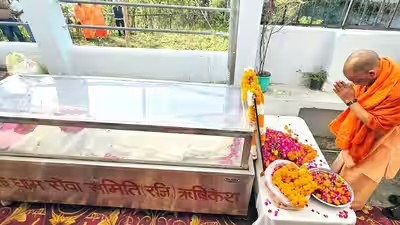
Dadar also occupies a central place in India’s social and political history because of its association with Dr Babasaheb Ambedkar.Ambedkar lived at Rajgruh in Dadar, and after his death on December 6, 1956, he was cremated at the site that later became Chaityabhoomi, his memorial near Shivaji Park. Every year, on Mahaparinirvan Din, lakhs of followers visit the memorial to pay tribute to him.The demand to rename Dadar railway station Chaityabhoomi is rooted in this association. Supporters argue that the station is the principal gateway for people travelling to Ambedkar’s memorial and that the name would recognise his legacy.

Chaityabhoomi demand
In 2018, NCP legislator Prakash Gajbhiye moved a proposal in the Maharashtra Legislative Council to name Dadar station after Ambedkar. The upper house unanimously cleared it, and the proposal was sent to the Centre for consideration, as railway station names fall under the central government’s jurisdiction. Gajbhiye argued that Ambedkar had lived in Dadar for years and that lakhs of followers visited Chaityabhoomi annually.The proposal is not new. In 2011, the NCP revisited the demand ahead of civic elections, with party workers seeking to include it in a charter of demands for Dalit welfare. The issue also drew opposition from MNS chief Raj Thackeray, who argued against renaming Dadar for political gains.In December 2023, Mumbai Congress president Varsha Gaikwad renewed the demand, calling it a long-pending request of Ambedkar’s followers. She pointed to the renaming of Elphinstone Road station as Prabhadevi and said Dadar should similarly be named Chaityabhoomi.The latest announcement has again brought the question into public discussion, with supporters viewing the name as a tribute to Ambedkar and critics raising concerns about changing the identity of a historic locality.
Other stations, other names
Mumbai has seen several railway station names change over the years. Elphinstone Road station became Prabhadevi on July 19, 2018, after the state legislature passed a resolution and the Centre approved the proposal. The name comes from the nearby temple dedicated to the deity Prabhadevi.

Other renamings
In July 2024, the Maharashtra Legislative Council unanimously passed a resolution seeking to rename seven more stations: Marine Lines as Mumbadevi, Charni Road as Girgaon, Cotton Green as Kalachowki, Dockyard Road as Mazgaon, Currey Road as Lalbaug, Sandhurst Road as Dongri and King’s Circle as Tirthankar Parshwanath. The state was to seek the Union government’s approval for the changes.
‘Why fix anything that is not broken?’
For some residents, however, Dadar’s existing name is inseparable from their memories of the city.Nilofer, a Mumbai resident who has lived in the city for nearly 31 years, said she did not support renaming the railway station. “I have grown up in the city for almost 31 years, and I have only known the place as dadar. Why would the change be necessary now?” she said.She said the city’s concerns should be addressed before a name change. “I think Mumbai has a lot of its own issues with regards to dilaptating buildings, bad roads, traffic, pollution, housing crisis and more. Name change is the last thing I worry about.”“Let’s put it this way, why fix anything that is not broken?” she said.Princia, another Mumbai resident, said Dadar was part of her family’s history. “It’s my hometown, a place where my grandmother grew up. I’ve always known it as Dadar and I shall always call it so.”She said the station needed better infrastructure and maintenance, pointing to hawkers and the condition of bridges. “It serves no purpose other than wasting taxpayers’ money and time. Changing its name is not going to magically transform the condition of the station,” she said.For Princia, Dadar’s identity is tied to its history and people.“Dadar is an iconic name for many reasons. Its history and its people make it iconic. And the name is largely linked to its identity.”*The following reactions were recorded when the 1st announcement mistakenly referred to Dadar railway station instead of Dadar Metro station.
Discover more from updatview
Subscribe to get the latest posts sent to your email.