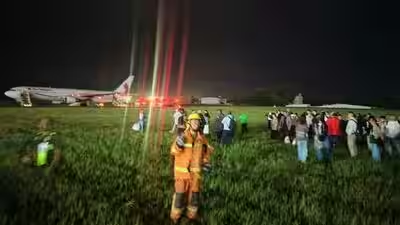




An Air Niugini aircraft carrying 146 people from Hong Kong to Papua New Guinea made an emergency landing in the southern Philippines on Saturday after its warning system indicated a possible fire in one of its engines, aviation officials said.All 137 passengers and nine crew members were safe, with no injuries reported, according to news agency AP. The passengers and crew evacuated the Boeing 767-383ER using emergency slides after the aircraft diverted from its scheduled route and landed at Davao International Airport, the Civil Aviation Authority of the Philippines said.According to Eric Apolonio, spokesperson for the aviation authority, the pilots received an indication of possible sparks or fire in the aircraft’s right engine. They followed safety procedures and requested permission to make an unscheduled landing in Davao shortly after midnight.Apolonio did not provide further details but said the investigation would also include statements from the pilots.Passengers and crew members were taken to the airport terminal, where they received assistance and hotel accommodation. There were no immediate reports of damage to the aircraft.The Davao airport temporarily suspended other flights to allow emergency teams to respond to the incident. The disruption led to the cancellation of two incoming domestic flights.The airport resumed operations after authorities completed safety checks on the main runway, the civil aviation authority of the Philippines said.
Discover more from updatview
Subscribe to get the latest posts sent to your email.