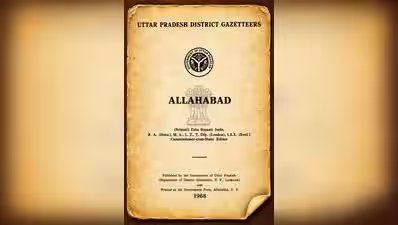


Prayagraj: The Magh Mela is now synonymous with Prayagraj’s biggest annual religious gathering. But historical records suggest that, for much of its modern history, it was not the largest fair in the region.The 1968 Allahabad District Gazetteer recorded an average daily attendance of 25,000 at the Magh Mela. In comparison, the Shitala Devi fair at Kada — now in Kaushambi district — drew an average of 1.5 lakh visitors a day, nearly six times the Magh Mela’s daily attendance.The Kada fair was held over 12 days across four periods of the year. These included a five-day fair in Ashadh, a four-day gathering during Saptami and Ashtami in Shravan, and a three-day donkey fair held around Shitalashtami.The same gazetteer listed 71 fairs in the then Allahabad district, which included present-day Kaushambi.Govind Nishad, a research scholar under Prof Badri Narayan at GB Pant Institute (Jhunsi), said the figures offer a different perspective on the pilgrimage landscape around Prayagraj.“The historical records show that the biggest fair in the Allahabad region was not necessarily at Sangam. The Shitala Devi fair at Kada recorded an average daily attendance of around 1.5 lakh, about six times the daily attendance recorded for the Magh Mela,” Nishad said.With the Magh Mela traditionally continuing for nearly 50 days, its cumulative footfall, based on the 1968 daily average, would work out to around 12.5 lakh.The comparison becomes even more striking when records from an earlier period are examined.The 1911 Allahabad District Gazetteer estimated the total number of pilgrims attending the Magh Mela in a normal year at between three lakh and five lakh. During the same period, the Shitala Dham fair at Kada was drawing exceptionally large crowds over a much shorter duration.Prof Yogeshwar Tiwari, former head of the department of medieval and modern history at Allahabad University, said British-era gazetteers provide important evidence of the scale and geographical spread of pilgrimage in the region.“Both the 1911 and 1968 gazetteers show that large pilgrimage centres existed beyond Prayag,” Tiwari said.Kada, situated on the banks of the Ganga, was an important historical centre. Known as Kada-Manikpur during the Sultanate period, it also occupies a significant place in medieval political history. Alauddin Khalji is believed to have killed his father-in-law, Sultan Jalaluddin Khalji, at Kada before taking control of the Delhi Sultanate, Tiwari said.The records also point to a religiously diverse fair culture along the region’s rivers.Alongside the Magh Mela, Ganga snan, Kartik Purnima, Shitala Devi and Shivratri gatherings, the gazetteer records urs associated with Ghazi Miyan, Bhulai Shah, Data Hayat Shah and Khwaja Kark. Muharram observances were also recorded.
Discover more from updatview
Subscribe to get the latest posts sent to your email.