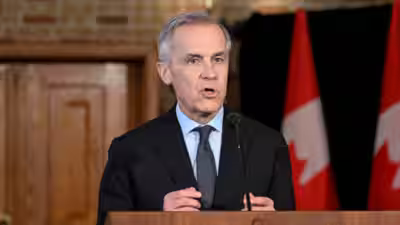

Canadian Prime Minister Mark Carney has said negotiations with the United States are moving forward, following a lengthy conversation with President Donald Trump and senior officials, even as Ottawa works to expand trade ties across Asia and reduce its reliance on the American market.Speaking to reporters in Manila on Saturday, Carney said he had a “quite a long, substantive conversation” with Trump shortly before leaving for his trip to Europe and Asia.“We are making progress. There is the possibility of a deal, a bilateral deal. But we’re not yet there,” he said.US Trade Representative Jamieson Greer and Trump’s newly appointed White House chief of staff, Stephen Miller, also took part in the discussion, Carney said.Ottawa, however, is not prepared to accept terms that could weaken its automotive industry, which has faced pressure from US tariffs.The latest discussions follow the breakdown of trade negotiations in August, when Canada suspended talks over last-minute demands from Washington that it considered unacceptable. The US subsequently imposed 50% tariffs on around $20 billion worth of Canadian goods, prompting Canada to introduce retaliatory duties in September. Negotiations have since resumed.A potential agreement could ease some of the tariffs affecting major industries, including steel and aluminium. However, the scope of any deal remains uncertain.Before the US midterm elections, Trump said the two countries were close to reaching an agreement. Carney later indicated that Washington had withdrawn demands concerning Canadian cultural policies, French-language protections and Ottawa’s ability to negotiate trade agreements with other countries.Trade tensions also became an issue during the midterm campaign. Democrats criticised the tariffs, linking them to higher consumer prices and promising to challenge the measures.Their electoral gains have complicated Canada’s negotiating position. Ottawa must now weigh the possibility of securing partial tariff relief through an agreement against holding out for broader free-trade access as Congress prepares to scrutinise the existing measures.While discussions with Washington continue, Carney announced progress on two separate trade arrangements in Southeast Asia.Canada has substantially concluded negotiations on a free-trade agreement with the Association of Southeast Asian Nations (ASEAN), a regional bloc representing nearly 700 million people. Ottawa has also completed negotiations on a separate agreement with the Philippines.The Canadian government estimates that the ASEAN deal could add nearly 2 billion Canadian dollars (US$1.4 billion) to the country’s economy and support close to 14,000 jobs, particularly across agriculture and manufacturing. Officials expect to sign the agreement next year.The proposed Philippines agreement would cover more than 90% of tariff lines, Carney said. Ottawa expects the arrangement to help triple Canadian exports to the country by 2035, with formal signing also anticipated next year.Both agreements form part of Canada’s wider strategy to diversify its export markets amid uncertainty over its trade relationship with the US.Carney has set a target of doubling Canadian exports to markets outside the US by 2035, making trade diversification a central part of his government’s economic agenda.His visit to Manila comes ahead of a three-day ASEAN summit involving regional leaders and representatives from partner countries, beginning on Sunday.The prime minister previously attended the European Political Community summit in Ireland. His itinerary also includes the Francophonie summit in Cambodia and the Asia-Pacific Economic Cooperation summit in China, where he is scheduled to meet Chinese President Xi Jinping.
Discover more from updatview
Subscribe to get the latest posts sent to your email.