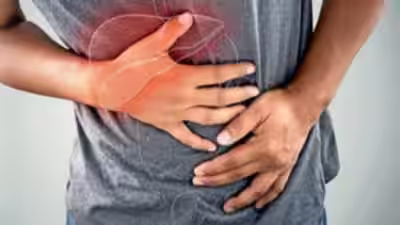

MUMBAI: Could exposure to a cocktail of heavy metals explain why the incidence of gall bladder cancer is unusually high in parts of India?A new study by Tata Memorial Centre’s Kharghar unit, ACTREC, has found a strong association between elevated blood levels of a mixture of metals, particularly copper, cadmium and manganese, and the risk of developing this rare and often aggressive cancer.Published in the indexed medical journal Scientific Reports on Nov 14, the study analysed blood samples from 912 gall bladder cancer patients being treated at Tata Memorial Centre hospitals and 1,140 people without the disease, making it the largest study of its kind in India.

Why is gall bladder cancer common in India
“We measured nine trace elements and found levels of some of these metals in the blood of cancer patients to be six to seven times the normal limits,” said one of the authors, Prof Rajesh Dikshit of the Centre for Cancer Epidemiology at ACTREC.The association persisted even after researchers accounted for other known risk factors, including a history of gallstones, tobacco use, mustard oil consumption and place of birth. Tata Memorial Centre, which functions under the Department of Atomic Energy, began investigating gall bladder cancer over two decades ago after doctors noticed that a disproportionately large number of patients from the Gangetic belt were coming to its Parel hospital with the disease. Subsequent studies identified several possible risk factors, including contaminated mustard oil, gallstones and genetic susceptibility (see box).Yet, despite advances in research, early detection and treatment remain major challenges. ACTREC director Dr Pankaj Chaturvedi said, “Unfortunately, most cases of gall bladder cancer are detected in the last stages, when the disease has already spread, making it incurable. Despite all the medical progress and research studies, the situation at the ground level has not changed over the last three decades.”The latest study could open up avenues for prevention by identifying environmental exposures that may contribute to the disease. “Trace elements are an overlooked risk factor in cancer development. Our study shows that metal mixtures, beyond gallstones alone, are associated with disease risk. Identifying the sources of these exposures, especially in the high-risk regions of India, could open the door to primary prevention,” said one of the authors, Mayur D Chauhan.Scientific officer and co-author Dr Sharayu Mhatre said gall bladder cancer was more common among women and had very poor survival outcomes. “It’s almost four times more common among women than men. And every subsequent pregnancy increases the risk of gall bladder cancer,” she said.Gall bladder cancer is particularly prevalent in India, with some of the highest incidence rates reported in the Northeast and along the Gangetic belt.Tata Memorial Centre’s research is now moving towards identifying people at high risk of developing the disease. “We have identified multiple genetic markers, including ABCB4 and ABCB1, as well as established the role of gallstones in the development of gall bladder cancer. We are now moving towards identifying biomarkers to find high-risk individuals,” said Dr Dikshit.
Discover more from updatview
Subscribe to get the latest posts sent to your email.