





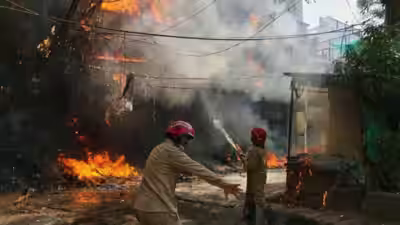

NEW DELHI: Behind the numbers are families wiped out, anxious residents trapped inside burning buildings, and lives lost in a matter of minutes.Till Nov 10 this year, 91 people died in Delhi in fire-re-lated incidents, already exc-eeding the 76 fatalities rec-orded in 2025, according to fire department data. At least 699 people were injured or rescued during this period, compared with 565 last year. Ju-ne emerged as the deadliest month, with 25 fatalities, fol-lowed by March with 15 and May with 12.The fatalities recorded in three fires — two in residential establishments and one in a commercial establishment —claimed 41 lives, accounting for nearly half of the total fire-related deaths.

June 2026 saw most fatalities
The deadliest incident was in June, when a massive blaze ripped through a bed and breakfast establishment in the densely populated Hauz Rani neighbourhood of south Delhi, killing 23 people. In May, nine people died after a fire broke out at a residential building in east Delhi’s Vivek Vihar. In March, nine members of a family, including three children, died after a fire broke out at their house in south-west Delhi’s Palam.Last year, Nov had seen the highest number of deaths at 13, followed by June and March, which saw 11 fatalities each. Aug accounted for seven deaths.Several factors contributed to the fire incidents and casualties, including the absence of emergency exits and fire alarm systems, inadequate ventilation, excessive use of combustible materials for decoration, and poorly maintained or outdated electrical wiring. Electric meter boards installed near staircases, unattended burning objects and other safety lapses further heightened the risk. Cramped spaces and narrow passages also hampered rescue operations, making it difficult for occupants to escape and emergency personnel to reach those trapped inside.Earlier, homes commonly used hardwood, which took longer to catch fire, but plywood, polyurethane acoustic foam and fabric-based materials, which are highly combustible, have become increasingly popular. An official said modern homes also lack adequate natural ventilation as air-conditioners have led people to seal rooms, trapping heat and smoke during fires and reducing the time available for rescue. He cautioned against using combustible materials for doors and fully enclosing terraces with iron mesh or doors, stressing the need for fire-retardant doors and adequately ventilated openings to facilitate emergency escape.Former DFS chief Atul Garg highlighted how modern building façades are increasingly fitted with glass panelling and toughened glass for aesthetic appeal. “While visually striking, such enclosures can trap smoke and heat inside during a fire. If buildings are designed this way, sprinkler systems must be installed on every floor to contain flames and aid evacuation,” he said.Air-conditioner malfunctions play a major role in many residential fire incidents, Garg added.“People use higher-amperage MCBs than required for their AC units, which prevents the circuit from tripping on time. It trips only after the wires are completely burnt. The ampere rating should match the air-conditioner so that it trips immediately in case of a malfunction. There should also be an initiative to ensure all ACs being sold are fire-retardant. In many global cities, even if an AC catches fire or blasts, the fire remains confined to the unit because of built-in fire-check systems,” he said.
Discover more from updatview
Subscribe to get the latest posts sent to your email.