
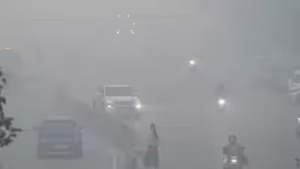





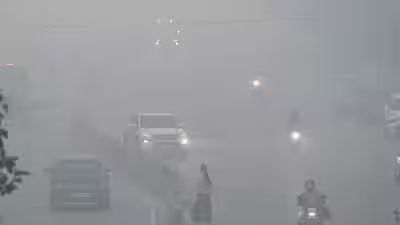

NEW DELHI: Delhi’s air quality improved to the ‘poor’ category on Tuesday, two days after Diwali, with the 24-hour average Air Quality Index (AQI) settling at 299.However, the pollution situation remained grim in neighbouring Loni, where real-time AQI touched 470 earlier in the day, falling in the ‘severe’ category.Delhi’s average AQI improved from 344 on Monday to 299 on Tuesday, just below the threshold for the ‘very poor’ category.Of the 58 monitoring stations that recorded data, 28 reported ‘very poor’ air quality, 28 were in the ‘poor’ category and two recorded ‘moderate’ levels. No station reported ‘severe’ air quality.Delhi Cantonment and Sri Aurobindo Marg were the only locations to record ‘moderate’ air quality, with AQI readings of 135 and 155, respectively. PM10 was the predominant pollutant in the capital.The improvement is expected to continue over the next few days, with experts attributing it to stronger winds that are helping disperse pollutants, news agency PTI reported.Mahesh Palawat, vice-president at Skymet and a weather expert, said northwesterly winds were affecting the Delhi region at an average speed of 12-14 kmph.He added that wind speeds were expected to remain high over the next couple of days, potentially bringing further improvement in air quality.The Air Quality Early Warning System for Delhi has also forecast a decline in PM2.5 and PM10 concentrations over the next two days.
Loni remains among the worst-hit areas
While Delhi’s overall AQI improved, Loni in western Uttar Pradesh continued to struggle with high pollution levels. The town, which topped IQAir’s list of the world’s most polluted cities in 2025, recorded a real-time AQI of 470 at New Tehsil-Loni earlier on Tuesday.The 24-hour average was considerably lower. At 5.05pm, the Uttar Pradesh Pollution Control Board’s Loni station recorded an AQI of 245, with an average PM2.5 concentration of 245 micrograms per cubic metre. Ghaziabad’s average AQI stood at 244 at 4pm, based on readings from all eight monitoring stations.Pollution levels had risen sharply in Loni after Diwali, celebrated on November 8. New Tehsil-Loni recorded an AQI of 463 at 9pm on November 9, while Loni Market recorded 450.The town’s AQI had remained in the ‘very poor’ category throughout November 1-9, with daily readings ranging from 277 to 373.IQAir reported a US AQI+ of 162 in Loni on Tuesday evening, with PM2.5 concentration 14.1 times the World Health Organization’s annual guideline value. The readings from different AQI systems and averaging periods are not directly comparable.Residents and officials have pointed to emissions from more than 1,000 small and medium industrial units, vehicles, construction dust, poorly maintained roads, open garbage burning and brick kilns as major contributors to Loni’s pollution.Chemical-processing units also release pollutants such as sulphur dioxide and nitrogen oxides, an official said.Loni is among several pollution hotspots identified by the Ghaziabad administration, including Sahibabad, Raj Nagar Extension, Bhopura, Indirapuram, Vasundhara-Vaishali, Vijay Nagar, Lal Kuan and Siddharth Vihar.
GRAP-3 restrictions and local measures
Stage III restrictions under the Graded Response Action Plan (GRAP) are in force across Delhi-NCR. In Loni, these include a halt to non-essential construction and demolition activities and restrictions on vehicles below BS-VI emission standards.UP Pollution Control Board regional officer Ankit Singh said more than 2,800 public construction sites across Ghaziabad district had been directed to suspend work. Monitoring was under way, and violations would invite penalties.The Ghaziabad district administration has directed the development authority, municipal corporation, UPPCB, transport department and police to prepare coordinated pollution-control plans.The municipal corporation has undertaken mechanised road sweeping and water sprinkling, while a proposed drone-based sprinkling initiative faced a setback after an inadequate number of companies responded to the tender.Residents, however, said such measures needed to be sustained beyond pollution emergencies. They called for regular water sprinkling, proper road cleaning, action against illegal industrial emissions and a crackdown on garbage burning.Local residents also reported breathing difficulties, eye irritation and coughing, particularly among children, senior citizens, outdoor workers and people with asthma.Some said they had stopped exercising outdoors during morning and evening hours and were using N95 masks when stepping out.
Stubble burning contribution may rise
In Delhi, the transport sector was estimated to be the largest contributor to pollution on Tuesday, accounting for 18%, according to the Decision Support System. Stubble burning was estimated to contribute 2%, though its share could rise to 7.9% on Wednesday.Satellite data detected 559 farm-fire incidents across six states on Monday. Madhya Pradesh reported 239 incidents, followed by Punjab with 198, Rajasthan with 50, Uttar Pradesh with 47, Haryana with 17 and Uttarakhand with eight.A total of 8,665 farm-fire incidents were detected across these six states between September 15 and November 9, according to data from the Consortium for Research on Agroecosystem Monitoring and Modelling from Space laboratory of the Indian Agricultural Research Institute.(With inputs from PTI)
Discover more from updatview
Subscribe to get the latest posts sent to your email.