




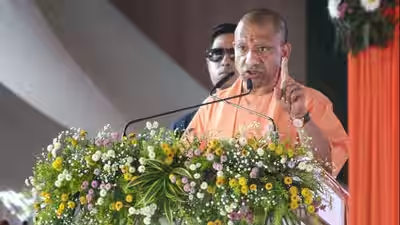

LUCKNOW: Uttar Pradesh chief minister Yogi Adityanath on Monday launched the second phase of Census 2027 in the state, with the self-enumeration process, followed by door-to-door population enumeration from December 1 to January 4.Describing the census as “extremely important”, he said the data would help the government prepare concrete action plans for the overall development of Uttar Pradesh.Addressing the launch programme at the Lok Bhawan Auditorium, the CM said the data collected through the census would help the government prepare development plans and enable the administration to implement them effectively.“On the occasion of the launch of this second phase of the Census program, I extend my heartfelt congratulations to all the residents of the state. Through the data that will be obtained from this census for their future plans, the government will be assisted in preparing a concrete action plan for the holistic development of the state, and the administration will also be aided in implementing it on the ground. From this perspective, Census 2027 is extremely important for all of us,” he said.Adityanath said the self-enumeration process will continue until November 30, followed by door-to-door population enumeration from December 1 to January 4.“As the director and chief census officer also mentioned, while it will take place in February in other states, in UP, self-enumeration will be conducted from November 16 to November 30. And thereafter, to carry this program forward in various phases, all these door-to-door population enumeration activities are scheduled to be completed between December 1 and January 4. Uttar Pradesh is the largest state in India by population,” he said.Census is the process of collecting, compiling, analysing and disseminating demographic, social, cultural and economic data about people in the country. The information collected serves as an important resource for planners, administrators, researchers and other data users.Census 2027 will be the 16th census since the exercise began and the eighth since Independence. The exercise will be conducted in two phases, with house listing scheduled between April and September 2026, followed by population enumeration in February 2027.The second phase will involve the collection of individual-level demographic, social and economic details through a household schedule containing 40 questions. These include information related to age, marital status, religion, caste, education, employment, migration, disability and other demographic parameters.A significant feature of Census 2027 is comprehensive caste enumeration, making it the first census since Independence to collect caste-related details across all communities. Until the 2011 Census, systematic caste enumeration was limited to Scheduled Castes and Scheduled Tribes. The decision to include comprehensive caste enumeration in the upcoming census was taken by the Cabinet Committee on Political Affairs on April 30, 2025.Census 2027 is India’s first digital census, with data collection being carried out through digital tools.Another major feature of Census 2027 is that it will be India’s first digital census, with data collection being carried out through digital tools.The Central government has approved an outlay of Rs 11,718.24 crore for conducting Census 2027 across the country. The exercise will cover 36 states and Union Territories, 7,092 sub-districts, 5,128 statutory towns, 4,580 census towns and approximately 6.39 lakh villages.
Discover more from updatview
Subscribe to get the latest posts sent to your email.