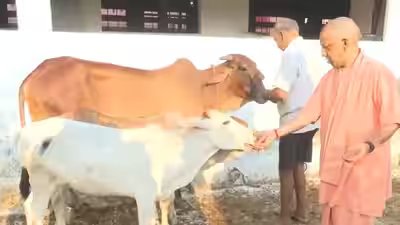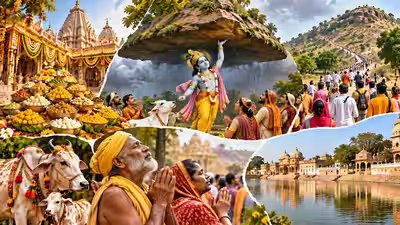

In Mathura-Vrindavan, the land of Lord Krishna, Govardhan Puja is far more than an annual festival. It represents the spiritual and cultural identity of Braj, drawing millions of devotees, locals, domestic and even from abroad, pay obeisance at Govardhan Hill, elaborate Annakoot offerings, the sacred 21-kilometre Parikrama and deep devotion to Lord Krishna. Every year, temples are illuminated, markets come alive and the towns and villages resonate with chants of “Giriraj Maharaj ki Jai”.As the legend goes, Lord Krishna lifted the hill on his little finger, sheltering the people and cattle for seven days. The episode symbolises environmental protection, humility, community solidarity and the triumph of faith over arrogance. These values continue to shape the celebrations, while highlighting Braj’s growing importance as a spiritual tourism destination.Annakoot: A celebration of abundance and sharingOne of the most spectacular features of Govardhan Puja is Annakoot, literally meaning a mountain of food. Temples across Mathura and Vrindavan prepare elaborate offerings of cooked dishes, sweets, fruits, cereals and traditional delicacies, arranging them like a mountain before the deity. Closely associated with this tradition is Chhappan Bhog, comprising 56 varieties of food. According to religious belief, Krishna missed his eight daily meals during the seven days he held Govardhan Hill. As a mark of gratitude, devotees offered him 56 dishes after the episode.At the historic Shri Dwarkadhish Temple in Mathura, special celebrations of Govardhan Puja darshan began in the morning, followed by Annakoot darshan in the day time. A symbolic Govardhan Hill made of cow dung was constructed and worshipped according to traditional rituals. The previous evening also witnessed the distinctive ‘Kaan Jagai’ ceremony associated with the temple’s Pushtimarg tradition.After the offerings, food is distributed as prasad among devotees. The tradition conveys gratitude towards nature, respect for food and the importance of sharing prosperity. Cows, central to Krishna’s life and Braj’s agrarian heritage, are also decorated and worshipped.Govardhan parikrama: A journey of faithIf Annakoot is the ceremonial heart of Govardhan Puja, the Parikrama is its most visible expression of devotion. Thousands of pilgrims undertake the approximately 21-kilometre circumambulation of Govardhan Hill, traditionally known as the seven-kosi Parikrama. The route passes through important religious sites, including Daan Ghati, Jatipura, Poonchhri Ka Lautha, Kusum Sarovar, Radha Kund and Mansi Ganga.Devotees walk barefoot, chant Krishna’s name or undertake the arduous Dandavat Parikrama, repeatedly prostrating themselves along the route. Families walk together, elderly pilgrims receive support from younger members, and groups sing devotional songs. Chants of ‘Radhe Radhe’ and ‘Giriraj Maharaj ki Jai’ create an atmosphere of collective devotion.A changing Braj: Tradition meets modern infrastructureMathura-Vrindavan’s growing popularity as a religious destination has increased the need for better infrastructure and public amenities. During major festivals, large numbers of visitors put pressure on roads, parking facilities, sanitation and public services. Managing narrow streets, crowded temple approaches and heavy pedestrian movement requires coordination among the district administration, police, municipal authorities and temple committees.Under Chief Minister Yogi Adityanath, the Uttar Pradesh government has placed emphasis on improving pilgrim facilities, security and crowd management at major religious gatherings. An integrated control room monitored 184 important locations through CCTV cameras, watchtowers and wireless communication. Traffic regulation, designated parking, drinking water, medical assistance, lighting and sanitation were also important components of the arrangements.Ramesh Sharma, whose three generations lived in Vrindavan, thanks current ruling dispensation for the civic facilities developed during the last nine years.“Pilgrims expect accessible roads, organised transport, clean surroundings, drinking water and emergency medical support. Improvements in these areas benefit local residents as much as visitors, making religious tourism more organised and sustainable, observes 70-year old Urmila Raghuvanshi who never missed the darshan of deity on Govardhan Puja day for 55 years.Preserving the cultural identity of BrajThe story of Krishna lifting Govardhan Hill carries a message of environmental responsibility, protection of cattle, respect for natural resources and community solidarity. These values remain relevant in a region historically connected with agriculture and cattle rearing.Mathura, Vrindavan, Govardhan, Gokul, Barsana and Nandgaon together form an interconnected sacred landscape associated with Lord Krishna and Radha. The traditional 84-kosi Braj Parikrama, covering approximately 252 kilometres, connects numerous religious and cultural sites across the region.Preserving this heritage requires more than maintaining temples. It involves protecting traditional water bodies, improving sanitation, conserving heritage structures and safeguarding pilgrimage routes. For the state government, promoting Braj’s religious and cultural heritage is an important part of Uttar Pradesh’s tourism strategy.The enduring spirit of BrajGovardhan Puja reflects the remarkable ability of Braj to preserve its ancient traditions while adapting to modern requirements. From the elaborate Annakoot offerings to the thousands undertaking the sacred Parikrama, every aspect of the festival celebrates the enduring bond between Lord Krishna and the people of Braj.For pilgrims, Govardhan remains the sacred hill that Krishna lifted to protect the people. For local residents, it represents cultural inheritance, livelihood and collective identity. For Uttar Pradesh, it is an invaluable spiritual and tourism asset.Ultimately, Govardhan Puja celebrates nature, gratitude, faith and community. As the chants of ‘Giriraj Maharaj ki Jai’ echo along the Parikrama route and the aroma of Annakoot fills the temples, Braj reaffirms the enduring appeal of its spiritual traditions. The celebration is not merely a remembrance of a divine episode but a living expression of the faith, culture and community spirit that continue to define Braj.Devotees, residents and economic opportunitiesFor devotees, Govardhan Puja offers an opportunity to experience Braj’s spiritual splendour and reconnect with its traditions. People from different states and generations participate in the celebrations, with many families making the pilgrimage an annual tradition. While elderly devotees regard the Parikrama as an important spiritual commitment, younger visitors discover the region’s cultural heritage through these celebrations.For local residents, the festival also brings substantial economic activity. Hotels, guesthouses, restaurants, sweet shops, flower sellers, transport operators, guides and vendors of religious merchandise benefit from the influx of pilgrims. Demand for flowers, sweets, puja materials, souvenirs and local food increases, creating seasonal income opportunities for families associated with religious tourism.In Mathura-Vrindavan, the land of Lord Krishna, Govardhan Puja is far more than an annual festival. It represents the spiritual and cultural identity of Braj, drawing millions of devotees, locals, domestic and even from abroad, pay obeisance at Govardhan Hill, elaborate Annakoot offerings, the sacred 21-kilometre Parikrama and deep devotion to Lord Krishna. Every year, temples are illuminated, markets come alive and the towns and villages resonate with chants of “Giriraj Maharaj ki Jai”.As the legend goes, Lord Krishna lifted the hill on his little finger, sheltering the people and cattle for seven days. The episode symbolises environmental protection, humility, community solidarity and the triumph of faith over arrogance. These values continue to shape the celebrations, while highlighting Braj’s growing importance as a spiritual tourism destination.Annakoot: A celebration of abundance and sharingOne of the most spectacular features of Govardhan Puja is Annakoot, literally meaning a mountain of food. Temples across Mathura and Vrindavan prepare elaborate offerings of cooked dishes, sweets, fruits, cereals and traditional delicacies, arranging them like a mountain before the deity. Closely associated with this tradition is Chhappan Bhog, comprising 56 varieties of food. According to religious belief, Krishna missed his eight daily meals during the seven days he held Govardhan Hill. As a mark of gratitude, devotees offered him 56 dishes after the episode.At the historic Shri Dwarkadhish Temple in Mathura, special celebrations of Govardhan Puja darshan began in the morning, followed by Annakoot darshan in the day time. A symbolic Govardhan Hill made of cow dung was constructed and worshipped according to traditional rituals. The previous evening also witnessed the distinctive ‘Kaan Jagai’ ceremony associated with the temple’s Pushtimarg tradition.After the offerings, food is distributed as prasad among devotees. The tradition conveys gratitude towards nature, respect for food and the importance of sharing prosperity. In neighbourhood temples and households, families prepare traditional dishes, decorate courtyards, create miniature Govardhan Hills and perform puja together. Cows, central to Krishna’s life and Braj’s agrarian heritage, are also decorated and worshipped. The participation of priests, temple committees, shopkeepers and residents gives the festival its strong community character.Govardhan parikrama: A journey of faithIf Annakoot is the ceremonial heart of Govardhan Puja, the Parikrama is its most visible expression of devotion. Thousands of pilgrims undertake the approximately 21-kilometre circumambulation of Govardhan Hill, traditionally known as the seven-kosi Parikrama. The route passes through important religious sites, including Daan Ghati, Jatipura, Poonchhri Ka Lautha, Kusum Sarovar, Radha Kund and Mansi Ganga.Devotees walk barefoot, chant Krishna’s name or undertake the arduous Dandavat Parikrama, repeatedly prostrating themselves along the route. Families walk together, elderly pilgrims receive support from younger members, and groups sing devotional songs. Chants of ‘Radhe Radhe’ and ‘Giriraj Maharaj ki Jai’ create an atmosphere of collective devotion.A changing Braj: Tradition meets modern infrastructureMathura-Vrindavan’s growing popularity as a religious destination has increased the need for better infrastructure and public amenities. During major festivals, large numbers of visitors put pressure on roads, parking facilities, sanitation and public services. Managing narrow streets, crowded temple approaches and heavy pedestrian movement requires coordination among the district administration, police, municipal authorities and temple committees.Under Chief Minister Yogi Adityanath, the Uttar Pradesh government has placed emphasis on improving pilgrim facilities, security and crowd management at major religious gatherings. Experience gained during the Mudiya Purnima Mela has strengthened these arrangements. An integrated control room monitored 184 important locations through CCTV cameras, watchtowers and wireless communication. Traffic regulation, designated parking, drinking water, medical assistance, lighting and sanitation were also important components of the arrangements.Such facilities are increasingly essential. Pilgrims expect accessible roads, organised transport, clean surroundings, drinking water and emergency medical support. Improvements in these areas benefit local residents as much as visitors, making religious tourism more organised and sustainable.Devotees, residents and economic opportunitiesFor devotees, Govardhan Puja offers an opportunity to experience Braj’s spiritual splendour and reconnect with its traditions. People from different states and generations participate in the celebrations, with many families making the pilgrimage an annual tradition. While elderly devotees regard the Parikrama as an important spiritual commitment, younger visitors discover the region’s cultural heritage through these celebrations.For local residents, the festival also brings substantial economic activity. Hotels, guesthouses, restaurants, sweet shops, flower sellers, transport operators, guides and vendors of religious merchandise benefit from the influx of pilgrims. Demand for flowers, sweets, puja materials, souvenirs and local food increases, creating seasonal income opportunities for families associated with religious tourism.Preserving the cultural identity of BrajThe story of Krishna lifting Govardhan Hill carries a message of environmental responsibility, protection of cattle, respect for natural resources and community solidarity. These values remain relevant in a region historically connected with agriculture and cattle rearing.Mathura, Vrindavan, Govardhan, Gokul, Barsana and Nandgaon together form an interconnected sacred landscape associated with Lord Krishna and Radha. The traditional 84-kosi Braj Parikrama, covering approximately 252 kilometres, connects numerous religious and cultural sites across the region.Preserving this heritage requires more than maintaining temples. It involves protecting traditional water bodies, improving sanitation, conserving heritage structures and safeguarding pilgrimage routes. For the state government, promoting Braj’s religious and cultural heritage is an important part of Uttar Pradesh’s tourism strategy. Festivals such as Govardhan Puja, Janmashtami, Radhashtami, Holi and Mudiya Purnima showcase the region’s spiritual legacy while generating economic opportunities.The enduring spirit of BrajGovardhan Puja reflects the remarkable ability of Braj to preserve its ancient traditions while adapting to modern requirements. From the elaborate Annakoot offerings to the thousands undertaking the sacred Parikrama, every aspect of the festival celebrates the enduring bond between Lord Krishna and the people of Braj.For pilgrims, Govardhan remains the sacred hill that Krishna lifted to protect the people. For local residents, it represents cultural inheritance, livelihood and collective identity. For Uttar Pradesh, it is an invaluable spiritual and tourism asset.Ultimately, Govardhan Puja celebrates nature, gratitude, faith and community. As the chants of ‘Giriraj Maharaj ki Jai’ echo along the Parikrama route and the aroma of Annakoot fills the temples, Braj reaffirms the enduring appeal of its spiritual traditions. The celebration is not merely a remembrance of a divine episode but a living expression of the faith, culture and community spirit that continue to define Braj.
Discover more from updatview
Subscribe to get the latest posts sent to your email.