


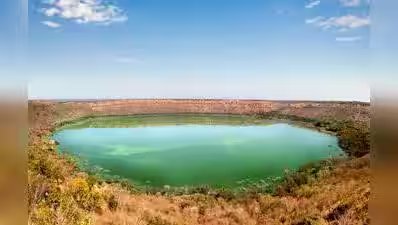

Kolkata: A spectacular meteorite impact crater formed thousands of years ago in Maharashtra has earned a place among the world’s most significant geological heritage sites, following a nomination spearheaded by the Kolkata-headquartered Geological Survey of India (GSI). Lonar Lake Impact Crater in Buldhana district has been included in the prestigious Third 100 Geological Heritage Sites recognised by the International Union of Geological Sciences (IUGS).The recognition, announced at an international geoheritage event hosted by Algarvensis Geopark in Portugal on November 6, places Lonar alongside geological wonders such as Japan’s Mount Fuji, Norway’s fjords, the San Andreas Fault in the US, Argentina’s Mount Aconcagua and the Chocolate Hills of the Philippines.For GSI, which has been spearheading efforts to identify, document and conserve India’s geological heritage, the recognition marks another significant achievement in bringing the country’s extraordinary geological formations to global attention.Estimated to be approximately 12,000 years old, Lonar is among the youngest and best-preserved bowl-shaped hypervelocity impact craters on Earth. Measuring around 1.88 km in diameter, it was created when a meteorite struck the Deccan Traps, an immense expanse of volcanic basalt formed around 65 million years ago.What makes Lonar particularly exceptional is its formation in basaltic rock, unlike most terrestrial impact craters found in other geological formations. It is considered one of only five known hypervelocity meteorite impact craters developed in basaltic terrain.The crater contains a saline-alkaline lake, creating a rare combination of geological and ecological characteristics that has fascinated scientists for decades.Its circular structure, fractured basalt, overturned rock layers and extensive deposits of debris thrown out during the impact provide compelling evidence of its extraterrestrial origin. Impact glass, microscopic spherules and rocks melted by the enormous energy of the collision offer scientists valuable clues to the physical and chemical processes accompanying high-velocity meteorite strikes.GSI took the initiative to prepare and submit Lonar’s nomination to IUGS as part of its continuing geoheritage conservation programme.The latest selection spans 47 countries, with 22 sites in the Asia-Pacific region, 34 in Europe, 22 in the Americas, 11 in Africa, six in the Middle East, two in Antarctica and three in the high seas.The IUGS programme, launched in 2022, has involved more than 1,000 experts from 90 countries and 20 international organisations.Beyond international prestige, the recognition is expected to strengthen efforts to protect Lonar, promote geological education and encourage scientifically responsible geotourism.The inclusion also underlines GSI’s expanding role in safeguarding India’s geological legacy for future generations.
Discover more from updatview
Subscribe to get the latest posts sent to your email.