


MUMBAI: From luxury homes and expensive cars to red-carpet appearances and millions of followers, celebrity life often looks enviable from the outside. But being famous also means living with a level of visibility most people never experience.Their homes are known, their movements are followed, and even a routine outing can attract attention. For some, that visibility can become a source of fear.That fear takes on a different dimension when a threatening message arrives, demanding crores of rupees or invoking the name of a notorious gangster.The sender may claim to belong to an organised crime network, know details about a celebrity’s life or threaten those close to them. But is the person really connected to the gang whose name they are using?Recent investigations into threats against Bollywood personalities have exposed a worrying possibility for police: criminals may be borrowing the identities and reputations of notorious gangsters to make their threats appear credible, even when they have no established links to those gangs.The names are familiar. The people using them, however, may not be.The distinction became clear in the case of actor Tusshar Kapoor. His team received an audio message from a person claiming to be Harry Boxer, an alleged member of the Lawrence Bishnoi gang. The caller demanded Rs 5 crore.The threat prompted Kapoor to alert Mumbai Police, following which the police protection branch enhanced security for him and his sister, producer Ekta Kapoor. But the investigation took an unexpected turn. The Crime Branch’s technical team compared the voice in the recording with available official samples of Boxer and found no match, according to police sources.Days later, police arrested Vaibhav Chandra Mishra, 30, an unemployed IIT graduate from Bengaluru, for allegedly sending threatening audio messages to actor Ayushmann Khurrana through Instagram.Police said he had no links to any gang. Officials later informed that Mishra had allegedly used artificial intelligence to issue the threats.The two cases have no confirmed connection. But they raise the same question for investigators: is a notorious gang actually behind a threat, or is someone simply using its name to create fear?
A borrowed identity
In the Tusshar Kapoor case, police suspect an unidentified person impersonated a gang member or used artificial intelligence tools to create a voice resembling Boxer’s. Senior officials said the threat appeared to be an attempt to exploit the fear surrounding the Bishnoi gang and extort money from Bollywood personalities.No FIR had been registered when the initial reports were published. The probe was handed to the Crime Branch’s Anti-Extortion Cell.In Mishra’s case, investigators traced him to Bengaluru through technical analysis of the Instagram accounts allegedly used to send the messages.

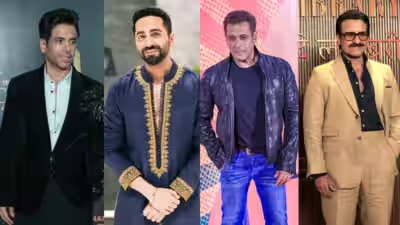
Bollywood threat cases involving alleged gang identities, with police verifying whether the threats are genuine or impersonated
“Prima facie, he has admitted to sending threats to Khurrana through Instagram,” DCP (crime) Raj Tilak Roshan said.“However, we suspect that he had created multiple fictitious Instagram accounts and may have sent threatening messages to a few other celebrities as well. This is being verified,” he added.Police said preliminary investigations suggested Mishra had sent the messages out of frustration. An official informed that he had no gang links. It remains unclear whether he had any role in the threat received by Kapoor.The use of a gang’s identity is not limited to threatening audio messages. In an alleged extortion plot involving actor Salman Khan, police uncovered what they described as a fabricated trail of WhatsApp chats and identities designed to make it appear that an organised crime gang was threatening him.Investigators found inconsistencies in the chats, while CCTV footage did not support the accused’s claims. He allegedly admitted to fabricating the story to extort money. Police were also examining whether he had acted alone.The latest case involving Saif Ali Khan has presented investigators with another verification challenge.The actor reportedly received a death threat from a person claiming to be Zeeshan Akhtar, a wanted accused in the Baba Siddique murder case. Police are checking whether Akhtar actually issued the threat or whether someone was impersonating him.
When a name carries its own threat
The reputation attached to these gang names is not without context. The October 18 firing incident targeting actor Tiger Shroff in Juhu, in which the Crime Branch arrested several accused, heightened security concerns among Bollywood personalities. Police have alleged that the attack was part of a larger organised crime conspiracy.But a genuine attack and an impersonated threat are not the same thing. The fear generated by one can make the other more convincing.

Gang impersonators use fake identities and threats invoking notorious names to exploit fear
Harry Boxer, whose name surfaced in the threat to Kapoor, has also been linked in police reports to firing incidents, including the attack on comedian Kapil Sharma’s cafe in Canada last year. Invoking a name associated with such incidents can give an otherwise unidentified caller an immediate air of credibility.A separate investigation into threats received by actor Ranveer Singh and filmmaker Rohit Shetty also shows why police are cautious about accepting claims of responsibility at face value.The two received a threatening audio clip from a person identifying himself as Boxer. The speaker accused Singh of going back on his word, threatened his staff and their families, and warned Shetty and the wider film industry to fall in line.However, Crime Branch officials said the clip’s authenticity had not been established. Police were examining whether the voice belonged to a genuine gang member or had been generated using artificial intelligence.Officers also said they had no records of the individuals claiming responsibility and sought technical assistance from police forces across the country. Singh and Shetty told police they had never communicated with the Bishnoi gang.
How police verify a threat
For investigators, establishing who is behind a threat involves more than identifying the name or gang invoked in a message.In Kapoor’s case, the Crime Branch compared the threatening audio with available voice samples of Boxer. In Khurrana’s case, technical analysis of Instagram accounts helped investigators trace the accused to Bengaluru.The Salman Khan investigation involved a different set of checks. Police examined the alleged WhatsApp conversations, compared the claims with CCTV footage and recovered two mobile phones that the accused had allegedly hidden near the Bandra seafront. Screenshots of the chats were also seized in the presence of witnesses.

Police verify threatening messages through voice samples, digital footprints, chat records, CCTV footage and evidence of gang links
In the Ranveer Singh-Shetty case, police sought technical assistance to establish the authenticity of the audio clip and verify the identity of the person claiming responsibility.Each investigation has followed a different trail. But the common challenge is to separate the identity claimed by the sender from the person actually behind the message.Shreya Joshi, a resident of Dadar, expressed her genuine fear of threats and extortion even for commoners. “Honestly, it is frightening because you can’t tell whether a threat is genuine or someone is bluffing. When someone uses a gangster’s identity, you naturally worry about your safety and your family. With AI, even voice messages can be misleading. The uncertainty is what makes the entire situation especially scary.”
The cost of doubt
For the police, such threats create a difficult balance. An unverified message cannot automatically be treated as an organised gang operation. But it cannot be dismissed simply because the sender’s identity is doubtful.Kapoor’s security was enhanced even as investigators questioned whether the caller was genuinely linked to Boxer. In Saif Ali Khan’s case, police are still verifying the identity of the person who allegedly issued the threat. The Ranveer Singh-Shetty audio, too, remains under examination.There is also a larger concern for officials. When the same gang name appears in threats from different people, it can create the impression of a single organised network at work, even when the cases may have no connection.Speaking to TOI, Hemangini Jain, a Delhi high court advocate, said, “Ordinary citizens are equally vulnerable, if not more, because unlike celebrities, they may not have the resources or access to seek immediate security. Anyone can misuse a gangster’s name to intimidate or extort money, and the victim may have no way of knowing whether the threat is genuine.“This creates a serious sense of insecurity, particularly when one’s family and personal safety are involved. The concern is that fear itself becomes a tool of extortion, regardless of whether the threatener has any actual criminal connections,” adv Jain added.The investigations do not establish that every threat invoking a gangster’s name is fake, or that organised crime networks are not behind some of them. They do, however, underline why police are looking beyond the name in a threatening message and trying to establish who is actually responsible.For the person receiving it, the name may be enough to trigger fear. For police officials, it is only the beginning of the probe.The name is not proof, and the threat alone does not establish a gang connection. The real question remains: who is actually on the other end of the call?
Discover more from updatview
Subscribe to get the latest posts sent to your email.