



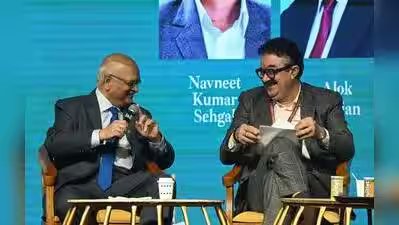

Lucknow: Jobs, happiness, bureaucracy, feminism and the growing space for regional voices in cinema came under the spotlight as speakers from diverse fields exchanged ideas on the second day of Koshala Literature Festival on Saturday.Speaking at a session on ‘The Policy Lab: Beyond GDP’, former IAS officer Alok Ranjan said, “Skill is the key to Viksit Bharat. For India to be a fully developed nation, we need to ensure that youth are employed in line with their education. It is important that the youth have a job, be it in a corporate or start up, so that they do not take to streets demanding employment.”Seconding him, former bureaucrat Navneet Sehgal said, “Youth must also think of being jobgivers and not mere jobseekers. Govt can only ensure an environment where jobs are created.”The session discussed how GDP is a barometer for measuring growth and not the happiness of people in any country. “GDP counts the production of goods and services. It doesn’t take into account the happiness quotient, and traits like kindness, compassion, belonginess and many others,” Ranjan said.For Sehgal, it was social relationships that measured the happiness of people. Citing an example of how a farmer in UP chose to attend a wedding instead of cutting crops, Sehgal said, “Happiness is a choice and varies from person to person. Of course, money is not the only parameter that defines happiness.”Earlier, Ranjan, while speaking on bureaucrats and the steel frame, said social media has brought changes in the working of civil servants and that people can now see and discuss officers’ work more openly.Educationist-economist Saloni Khanna said that civil services, once known as the ‘steel frame’, now feels like a ‘glass frame’. “This means that one viral reel or video can expose an officer or a govt action to quick public criticism. Therefore, officers have to be more careful and accountable.”In a session that discussed the Ramayan dialogues, film journalist, critic and author Bhawana Somaaya said all the women in the epic are empowered and express their feelings in different ways. Saying that Ramayana is not only about Sita but about 50 other women, Somaaya said, “Bollywood has taken ideas from all the epics, including conflict, conspiracy, and other themes. Cinema borrows from society, and society borrows from cinema. It mixes masala and throws it in a movie. If the audience likes it, it is a blockbuster; if the audience does not, it is a flop.”The literature festival witnessed the star cast of Lucknow-filmed series ‘How I met Lekhpal’. Theatre artists Dhananjay Sharma, Gyanendra Pratap Singh, and Ananya discussed theatre, cinema, regional languages, identity, and social issues covered in the series in a session titled “Roots, Reels and the Regional Renaissance”.Discussing ‘streewad’ (feminism), the artists said that women should not be limited by stereotypes or fixed social roles. “Women are beyond empowerment and that they should not compare themselves with men,” Ananya said.Series director Gyanendra Pratap Singh defined Bhojpuri and Awadhi as two of the best languages. “The negative image created by some Bhojpuri songs and the Bhojpuri film industry needs to be changed now,” he said.The conversation also referred to comedian Yash Maheshwari, who faced criticism and legal action after making objectionable remarks about Chhath Puja and Bihari women. The speakers said people should show the same anger against vulgar music and disrespectful content as they do when their traditions are insulted.
Discover more from updatview
Subscribe to get the latest posts sent to your email.