


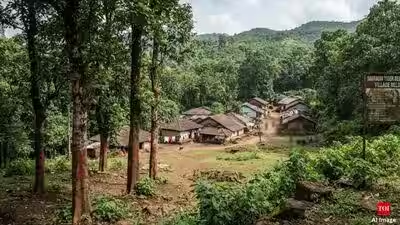


MUMBAI: Maharashtra’s efforts to clear tiger-reserve core areas of human habitation to improve wildlife conservation could come at a significant ecological cost. Relocation proposals in the Sahyadri Tiger Reserve landscape have been flagged for a cumulative impact involving nearly 1.15 lakh trees.The National Tiger Conservation Authority (NTCA) has refused to recommend one of the proposals, citing the use of dense forest for rehabilitation.Records obtained under the Right to Information (RTI) Act by Jeetendra Ghadge of the Young Whistleblowers Foundation reveal the scale of the proposed tree loss and raise questions about how the state is balancing tiger conservation with the protection of existing forest cover.The issue comes amid a renewed state push to expedite village rehabilitation. At a Maharashtra CAMPA authority meeting on October 26, the government directed that rehabilitation of villages in tiger reserves and protected areas be completed using CAMPA funds. It said 55 villages had already been relocated and sought central funding for further rehabilitation in phases.The RTI response shows that two villages in Chandoli National Park, part of the Sahyadri Tiger Reserve, received final approval for relocation-related forest land on January 29, 2024.Male was allotted 227.9 hectares, with 38,738 trees listed for felling, while Vele was allotted 112.25 hectares, involving another 2,918 trees. However, the column recording the actual number of trees felled was left blank in the department’s response.A February 16, 2026, communication from the Union environment ministry raised further concerns over the proposed relocation of Nivale village. Its rehabilitation site involves 63.091 hectares of forest land at Kagal in Kolhapur district, where 34,705 trees have been listed.The NTCA refused to recommend the proposal, pointing out that the land included dense forest and that degraded forest should instead be prioritised for rehabilitation.The authority also noted that Nivale had already been relocated once and called for a cumulative impact assessment. Separately, the ministry questioned a 76.17-hectare proposal for Kolane, asking why the relocation of one village had been divided into multiple proposals.The state, however, has cited factors supporting the relocation proposal. A central inspection report on Male found that 20,071 of the 38,738 trees listed for felling were Gliricidia, a species described as invasive and originally planted to green barren land. Around 87% of the trees were below 60 cm in girth.The report said no suitable non-forest land was available and that relocation would return 519.49 hectares to the forest. It also recorded that 140 families were seeking relocation.For the affected villagers, the issue is also one of prolonged uncertainty. The Satara district administration fixed November 12, 2025, as the cut-off date to identify eligible families from Male, Kolane and Patharpunj.In May 2026, it directed the forest department to pay subsistence allowances until rehabilitation was completed. Relocation is also intended to facilitate conservation measures, including the reintroduction of tigers in the reserve.Ghadge said rehabilitation from tiger-reserve core areas was necessary but should not become a process in which one forest was sacrificed to protect another without assessing the overall ecological damage.He questioned the absence of publicly available, proposal-wise assessments explaining the cumulative impact involving nearly 1.15 lakh trees.Environmental activist Rajesh Ruparel cautioned that compensatory plantation could not automatically replace an established natural forest. Mature forests support interconnected biodiversity, wildlife habitats, soil conservation and water systems, functions that newly planted saplings cannot immediately replicate, he said.The larger unanswered questions concern transparency and ecological accountability: how many trees have actually been felled, whether native-species restoration has begun and how authorities assessed the cumulative damage against the conservation gains.The forest department and NTCA have been sent queries. Their responses were awaited.
The numbers behind the relocation
The nearly 1.15 lakh trees represent the cumulative impact flagged by the NTCA and the Union environment ministry. This is not the verified number of trees already felled.Village-wise details:
- Male: 227.9 hectares of forest land; 38,738 trees listed for felling.
- Vele: 112.25 hectares; 2,918 trees listed.
- Nivale: 63.091 hectares; 34,705 trees listed.
- Kolane: 76.17 hectares; proposal questioned by the ministry.
What the inspection found in Male:
- 20,071: Gliricidia trees identified among the 38,738 listed for felling.
- 87%: Share of trees below 60 cm in girth.
- 140: Families seeking relocation.
- 519.49 hectares: Land expected to return to the forest.
According to the state government, 55 villages have already been relocated across Maharashtra’s tiger reserves and protected areas.
Discover more from updatview
Subscribe to get the latest posts sent to your email.