



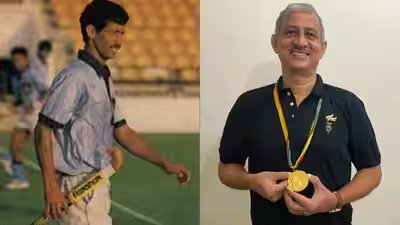

That week we were in our home in Kodagu, a little away from Madikeri town. By the time I returned from my morning walk that day (Oct 28), our neighbours in Bengaluru had called my wife to inform her about a break-in at our place.My first thought was about my medals, especially the 1980 Moscow Olympics gold, because those were the only precious items which I felt we had left at home. As my wife drove us to Bengaluru, I spent much of the journey calling my niece and then the police, who put me at ease by telling me not to panic.As the police worked on collecting fingerprints and other forensic evidence, I kept asking my family who had gone in what they could actually see. The medal boxes were there, they said, but the medals were missing. I hoped they were under the pile of clothes those people had strewn and left behind.My heart sank when I walked into the house. First, at all the clothes all around the place, then at the broken cupboard lock. The empty boxes of medals made me feel very sad and disappointed because I cherished them so much; they carried so many good memories and sentiments, and to me, they will always be priceless. I remember when I came back from Moscow, people often asked about the medal. But over time, fewer people asked to see it. Maybe the importance of Olympic sports had declined as other sports took over, but somehow, all that didn’t matter at this moment.My worst fear was losing the medals and never seeing them again. And that would have been a big blow because they were the only prize we received for winning and participating in the Olympics at Moscow. I felt a great dread that I wouldn’t get them back and that they wouldn’t be recovered.As I have said before, I thought the people who took it away likely didn’t know its sporting value. For me, it was priceless, for them, it was gold. It could end up at a pawn shop or worse, just be melted down. That thought gnawed away inside me.Despite the sinking feeling, I immediately began running other scenarios through my mind – whether I could apply to the International Olympic Committee for a replacement medal because of the loss. At the same time, there was that smidgen of hope that lingered because the police had given me their assurance.In the two weeks between the break-in and Wednesday’s recovery, I was assailed by a lot of nostalgia. The day we won the medal, Zafar Iqbal and I were taken for a dope test immediately after the medal ceremony. Once back in the Games Village, I was so exhausted that I slept without changing. The medal had stayed around my neck! Other memories played out as well. I thought back with gratitude because that was my first time playing for India. Also, I had never been out of the country. I had never played on artificial turf before. I looked back at the youngster in me, who wore an oversized India kit (I was a thin boy) and went out to play.Days with our coach, Balkrishan Singh, and captain V Baskaran came back to me, and recollections of how they had faith in me and guided me. I wasn’t in the initial playing XI and was one of the two substitutes, more like an understudy. Just before the Olympics, we played a few practice matches against the local clubs, and Balkrishan sir and Baskaran felt I should be in the playing XI, which I’d never dreamt I would be in. It’s where my career took off. The trust they showed in me meant I probably never sat on the bench for almost nine years that followed.(Former Indian hockey captain MM Somaya is an 1980 Olympic gold medallist and 1982 Asian Games silver medallist. He spoke to Manuja Veerappa).
Discover more from updatview
Subscribe to get the latest posts sent to your email.