

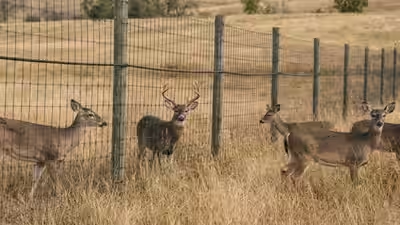


A commercial deer-hunting business on a 100-acre property in Kansas cannot claim exemption from zoning rules just because it raises domesticated deer, a state appeals court has ruled. The November 20 decision followed objections from two neighbouring couples, who raised concerns about customers using firearms and other weapons close to their homes.Danny and Laura Hawkins run the business, called OZsome Big Game Hunts. Customers pay between $3,500 and $7,500, depending on the size of the deer’s antlers, for an opportunity to hunt the animals.Their neighbours, Jim and Diana Iseman and Bill and Kara Reynolds, challenged the operation. They argued that it was a commercial hunting business, not an agricultural activity, and should therefore require a special-use permit.The Hawkins maintained that they were raising domesticated deer, which are treated as livestock under Kansas law. They argued that the agricultural exemption protected their property from county zoning restrictions.The Kansas Court of Appeals upheld an earlier district court ruling that the property was being used as a recreational hunting preserve. It said the business needed a special-use permit under Coffey County’s zoning rules.
How the dispute began
According to the ruling, the matter first came before the county’s zoning administrator in 2019. On July 9, the administrator sent the Hawkins information about agricultural zoning rules and an application for a special-use permit, which carried a $150 fee.After investigating the operation, the administrator informed them in a July 25 letter that the hunting preserve violated county zoning rules. The Hawkins appealed to the county’s Board of Zoning Appeals.In October 2019, the board overturned the administrator’s decision. It classified the property as a privately owned wildlife habitat and reserve, treating it as agricultural land that did not need a special-use permit.The neighbouring couples challenged that decision in court. In February 2021, the district court ruled in their favour, finding that the property was being used for commercial recreational hunting rather than agriculture.
Why court rejected agricultural exemption
The appeals court accepted that domesticated deer qualify as livestock and that raising them is an agricultural activity. However, it said the main purpose of the Hawkins’ property was important in deciding whether the exemption applied.The business advertised hunting packages as an experience for paying customers. It also offered photography and video services, along with transport to and from Kansas City International Airport for visitors travelling from outside the state.Customers could hunt with high-powered rifles or bows and arrows. The business advertised that they could use “whatever weapon you want”.The court said these services showed that customers were paying for a recreational hunting experience. The deer were specially bred and managed for that purpose, rather than being raised as part of a traditional agricultural operation.The judges also referred to earlier Kansas cases involving wildlife hunting and racehorse training. In one case, landowners who grew crops to attract wild animals were considered to be using their property for agriculture. The court said the Hawkins’ operation was different because customers hunted domesticated deer kept inside a fenced area.It also drew a comparison with a case involving racehorses. Although horses are livestock, training them for racing was found to go beyond the traditional meaning of agriculture. The judges applied a similar distinction to the deer-hunting business.
Neighbours’ concerns about hunting
The neighbouring couples also questioned the risks of allowing customers to use weapons near their properties, which are a few hundred yards from the hunting area.The court noted that the Kansas Department of Wildlife and Parks does not regulate the killing of domesticated deer because they are classified as livestock. They fall under the Department of Agriculture instead. There is no designated hunting season for these deer, although state law requires hunters to hold a valid Kansas hunting licence.The judges also considered the neighbours’ concern that bullets could travel beyond the fenced property. They said county rules allow certain activities to require special approval when they could affect nearby properties.
Landowners’ role in the earlier case
The appeals court also considered a separate dispute over the legal proceedings. The Hawkins had not been named as parties when the neighbours first challenged the zoning board’s decision, even though the case directly affected how they could use their land.The court agreed that the landowners should have been included. It found that the county’s interests did not necessarily match theirs and that the Hawkins had not been adequately represented.It also upheld the district court’s decision to allow them to join the case and reopen the earlier judgment, finding that they had acted within a reasonable time after learning their interests were not being properly represented.The appeals court affirmed the district court’s ruling. The Hawkins’ hunting business must obtain a special-use permit to operate under Coffey County’s zoning regulations.
Discover more from updatview
Subscribe to get the latest posts sent to your email.