




With nearly 19.23 lakh registered users on the iGOT Karmayogi platform, more than 350 registered training institutions and strong departmental performance, Uttar Pradesh emerges as the national leader in strengthening the skills, competencies and efficiency of its government workforce.Uttar Pradesh has secured the first position in the country for the implementation of Mission Karmayogi, the Government of India’s flagship initiative to transform public-sector capacity building. Rajasthan secured the second position, followed by Jammu and Kashmir in third place. The national ranking was announced at the Northern Regional Workshop, jointly organised by the Dr. Ram Manohar Lohia Uttar Pradesh Administration and Management Academy (RUPAAM) and the Capacity Building Commission of the Government of India.The recognition marks an important achievement for Uttar Pradesh, which has been working to make continuous learning, professional development and administrative efficiency integral to its governance framework. It reflects the state’s efforts to move beyond conventional training programmes towards a structured system in which government officers and employees regularly upgrade their knowledge, skills and professional competencies.Under the leadership of Chief Minister Yogi Adityanath, the state has placed increasing emphasis on administrative accountability, efficiency and citizen-centric service delivery. The achievement under Mission Karmayogi demonstrates how this approach is being extended to the development of the government’s human resources, recognising that an efficient administration depends not only on policies and infrastructure but also on the capabilities of the people responsible for implementing them.
Recognition for Uttar Pradesh’s administrative leadership
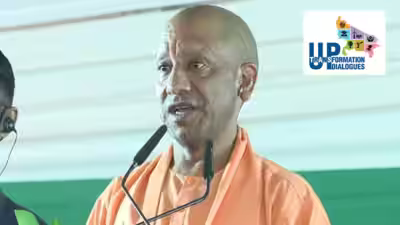
Chief Minister Yogi Adityanath presented awards to the states and departments that demonstrated outstanding performance in implementing Mission Karmayogi. He also acknowledged the contribution of officials and training institutions whose efforts helped Uttar Pradesh secure the top position.Representing the state, RUPAAM Director General M. Devraj, Director Sanjay Kumar, and Additional Director and Nodal Officer Sunil Kumar Chaudhary were honoured for their contributions to the successful implementation of the mission.The recognition is significant because Uttar Pradesh, with its extensive administrative machinery and large government workforce, faces the challenge of ensuring that training reaches employees across departments, institutions and different levels of administration. Establishing a common learning framework for such a vast workforce requires institutional coordination, digital infrastructure and sustained monitoring.The state’s performance indicates that capacity building is increasingly being treated as a continuous administrative responsibility rather than an occasional exercise undertaken only when new policies or procedures are introduced.
Mission Karmayogi: Transforming the culture of governance
Launched by the Government of India, Mission Karmayogi seeks to transform the way government employees acquire professional skills and perform their responsibilities. Its central objective is to develop a competent, accountable and future-ready civil service capable of responding effectively to the changing requirements of governance.Traditionally, government training programmes have often focused on rules, procedures and general administrative knowledge. Mission Karmayogi seeks to make this approach more comprehensive by linking learning with the specific responsibilities and competencies required for different government positions.The mission promotes a shift from a rule-based approach to a role-based system of capacity building. Under this framework, employees are encouraged to acquire the knowledge, behavioural skills and professional abilities necessary for their particular assignments. The iGOT Karmayogi digital platform serves as the principal learning infrastructure for this transformation. It provides government employees access to courses covering administration, technology, leadership, communication, financial management, public service delivery and other areas relevant to their professional responsibilities.The platform also enables employees to learn at their own pace, making training more accessible and flexible. This is particularly important for a large state such as Uttar Pradesh, where government personnel are spread across districts, divisions, departments and field-level institutions.
The numbers behind Uttar Pradesh’s achievement
The scale of participation on the iGOT Karmayogi platform is one of the strongest indicators of Uttar Pradesh’s performance. According to the figures available, approximately 19.23 lakh users from various state departments and ministries are registered on the platform. More than 99 per cent of these registered users are active, demonstrating an exceptionally high level of engagement with the digital learning system.This level of participation is significant because the success of any capacity-building programme depends on the willingness of employees to participate in learning and apply the acquired knowledge in their professional responsibilities.Uttar Pradesh has also expanded the institutional infrastructure supporting the initiative. More than 350 training institutions have been registered under the Unnati initiative, which seeks to strengthen the quality and effectiveness of institutions responsible for training government personnel.These institutions play an important role in designing courses, imparting professional knowledge, developing specialised skills and preparing government employees for emerging administrative challenges.The state has also undertaken focused capacity-building campaigns. In January 2026, it organised a seven-day programme covering officers and employees across the government system. Uttar Pradesh also recorded strong participation during Sadhana Saptah, another important initiative aimed at promoting continuous learning and professional development.Other programmes, including Nirbhay Netri, Nirbhay Chetna, Kaushal Setu and Kaushal Sarathi, further demonstrate the state’s efforts to expand training opportunities and address different dimensions of professional capacity building. Together, these initiatives reflect a broader strategy to make learning an integral part of the functioning of government departments.
Departments demonstrate excellence
The achievements of individual departments were another important feature of the national workshop. Several Uttar Pradesh departments secured leading positions in their respective categories, demonstrating the widespread adoption of the Mission Karmayogi framework across the state administration.In Category A, the Home Department secured first place. The department completed more than one crore training courses, an achievement that highlights the scale of its capacity-building efforts. The award was received by DG Training Rajiv Agrawal and DIG Dev Ranjan Verma on behalf of the department.The Basic and Secondary Education Department secured second place in the same category. It also completed more than one crore training courses, reflecting its commitment to continuous professional development. Additional Chief Secretary Partha Sarthi Sen Sharma and Director General (School Education) Monika Rani received the award.The performance of these two departments is particularly noteworthy because both operate extensive institutional networks and have a direct bearing on public service delivery. Regular training is essential for improving administrative coordination, professional knowledge and the implementation of government programmes.In Category B, the Higher Education Department secured first place, with Additional Chief Secretary Amit Ghosh receiving the award. The Infrastructure and Industrial Development Department secured second place, and Additional Chief Secretary Alok Kumar accepted the recognition.In Category C, the Handloom and Textiles Department won first place, while the Administrative Reforms Department secured second position. Principal Secretary Anil Kumar Sagar received the award for Handloom and Textiles, while Secretary Bhupendra Chaudhary represented the Administrative Reforms Department.The achievements across these categories demonstrate that capacity building is not limited to a particular administrative segment. Departments dealing with policing, school education, higher education, industrial development, traditional industries and administrative reforms are all participating in the learning initiative.This cross-departmental participation is important for building a common culture of professional excellence throughout the government system.
Unnati capability index: Strengthening training institutions
An important highlight of the workshop was the launch of two initiatives by the Capacity Building Commission. These initiatives seek to improve both the quality of training institutions and the design of training programmes.The first is the Unnati Capability Index, which aims to establish a systematic framework for assessing and improving institutions engaged in public-sector capacity building. More than 1,000 training institutions across the country contribute to the professional development of government employees. These include administrative academies, departmental training centres and specialised institutions.Until now, the assessment of these institutions was generally conducted once every two years. The Unnati Capability Index seeks to introduce a more continuous system of evaluation, enabling institutions to monitor their performance and undertake regular improvements. The index will use a star-rating system based on three indicators and seven assessment domains. Its evaluation framework will consider important aspects such as faculty strength, curriculum quality and institutional structure.An important feature of the system is that institutions will be compared with others belonging to similar categories. This will ensure that an administrative academy is assessed against comparable institutions rather than being evaluated using the same parameters as an entirely different training establishment.Artificial intelligence will also be used to analyse institutional data and identify areas requiring improvement. However, the responsibility for decision-making and implementing improvements will remain with the institutions themselves.The Unnati Readiness Index will further enable institutions to assess their existing capabilities, identify shortcomings and prepare improvement plans.The broader objective is to transform training institutions into professional capacity-building organisations that continuously evaluate their performance, improve their teaching methods and respond to the changing requirements of public administration.For Uttar Pradesh, which has already registered more than 350 institutions under the Unnati initiative, this framework offers an opportunity to further strengthen its institutional training ecosystem.
National curriculum design framework: Making training role-based
The second major initiative launched at the workshop was the National Curriculum Design Framework (NCDF). Developed on the foundation of the Karmayogi Quality Framework and the Karmayogi Competency Model, the NCDF aims to bring greater consistency and purpose to the design of training programmes across government institutions.The framework recognises that different government positions require different levels of knowledge, decision-making abilities and professional competencies. A field-level employee, a departmental officer and a senior administrator do not perform identical responsibilities. Consequently, their training requirements must also differ.The NCDF provides a structured approach to designing courses according to an employee’s role, responsibilities and expected competencies. It identifies four levels of learning: foundational, proficiency, advanced and expert.At the foundational level, training focuses on developing essential knowledge and understanding of administrative processes. The proficiency level aims to strengthen the ability to perform assigned responsibilities effectively.The advanced level focuses on more complex professional requirements, while the expert level prepares individuals for specialised responsibilities, strategic thinking and higher-level decision-making.These levels also take into account the complexity of strategic, tactical and operational decisions associated with different administrative roles. The framework is expected to help training institutions develop more relevant and outcome-oriented courses. Instead of following a uniform approach for all employees, institutions can design learning programmes that correspond to actual workplace requirements.This is an important step towards ensuring that training translates into improved professional performance and more effective public service delivery.
Strengthening cooperation among training institutions
Capacity building is a continuous process, and no single institution possesses all the knowledge, experience and resources required to address every administrative challenge. Sharing expertise and adopting successful practices from other institutions can significantly improve the quality of training.In this direction, RUPAAM signed memorandums of understanding with various state and central training institutions. These agreements are expected to facilitate the exchange of knowledge, teaching resources, institutional expertise and best practices. They will also support improvements in institutional assessment, curriculum development and the delivery of professional training programmes.Such partnerships can help training institutions learn from one another and adopt innovative methods developed elsewhere.For Uttar Pradesh, this collaboration is particularly relevant given the size and diversity of its administrative system. Training requirements vary across urban and rural administration, policing, education, infrastructure development and other public services. Institutional partnerships can help address these specialised needs more effectively.
Building a more efficient and citizen-centric administration
The larger significance of Uttar Pradesh’s achievement under Mission Karmayogi lies in its potential impact on governance. Government policies and welfare schemes ultimately succeed through the officials and employees responsible for implementing them. Whether it is delivering public services, maintaining law and order, improving education, managing infrastructure projects or implementing social welfare programmes, administrative competence plays a decisive role.A well-trained government workforce is better equipped to understand new policies, use digital technologies, respond to citizens’ concerns and ensure timely implementation of programmes.Continuous training also helps employees remain updated with changing laws, administrative procedures and technological developments. It encourages professional responsibility, improves coordination and creates opportunities for innovation within government institutions.The Yogi Adityanath government has consistently emphasised administrative efficiency, accountability and time-bound implementation. Mission Karmayogi complements this approach by focusing on the people who translate government decisions into action.The state’s first-place national ranking, supported by nearly 19.23 lakh registered users, more than 99 per cent active participation and over 350 registered training institutions, provides evidence of the scale at which this transformation is being pursued.The recognition also places greater responsibility on Uttar Pradesh to sustain its performance and continue improving the quality of training.
From training participation to better governance
Uttar Pradesh’s leadership in Mission Karmayogi represents an important milestone in its efforts to modernise public administration. The achievement reflects the combined contribution of the state government, administrative departments, training institutions and officials who have made continuous learning a priority.The initiatives launched by the Capacity Building Commission provide a roadmap for the next phase of this transformation. The Unnati Capability Index will strengthen the institutions delivering training, while the National Curriculum Design Framework will improve the relevance and quality of courses.Together, these measures seek to move capacity building beyond participation and course-completion figures towards measurable improvements in professional competence and administrative performance.For a state as large and administratively diverse as Uttar Pradesh, building a skilled, responsive and future-ready government workforce is essential to achieving its development objectives. The first-place national ranking is therefore more than an award. It is recognition of an administrative approach that places people, skills and continuous learning at the centre of governance.The ultimate measure of success will be the extent to which this learning translates into faster decisions, better implementation of public programmes and improved services for citizens. Uttar Pradesh has taken a significant step in that direction by emerging as the country’s leading state in Mission Karmayogi.
Discover more from updatview
Subscribe to get the latest posts sent to your email.