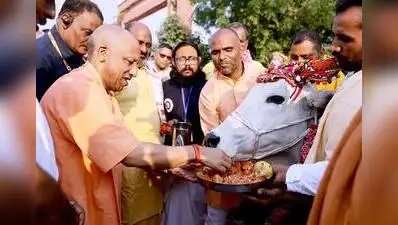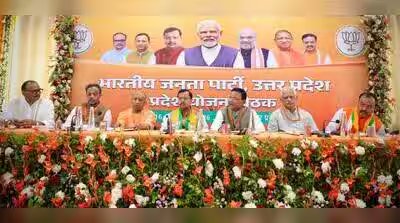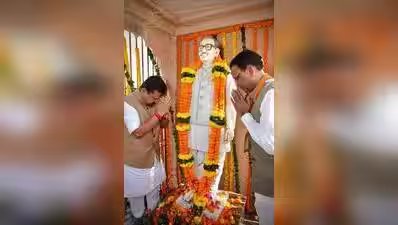

Lucknow: If politics were about symbolism then BJP’s decision to hold its two-day organisational brainstorming meeting in Mathura may well have met the objective perfectly.The choice of venue brought together two important strands of the party’s political and ideological legacy — Hindutva movement centred around Shri Krishna Janmabhoomi and the ideological foundations laid by Jana Sangh stalwart Pandit Deendayal Upadhyay.Mathura is not just one of the country’s most revered pilgrimage centres. It is also a politically significant location for the BJP, which has consistently sought to keep the issue of Krishna Janmabhoomi alive as part of its larger Hindutva discourse. Equally significant is the fact that Deendayal Upadhyay, whose philosophy of Integral Humanism continues to be invoked by the BJP as its ideological compass, was born in Nagla Chandrabhan village in Mathura district, now known as Deendayal Dham.The symbolism was further reinforced by the choice of the venue — Pandit Deendayal Upadhyaya Gau Anusandhan Kendra in Parkham village. Thus, the party’s top organisational leadership assembled in a district that represents both its ideological roots and one of its most prominent contemporary political aspirations.Not surprisingly, deputy CM Keshav Prasad Maurya was quick to reiterate the demand for a grand Shri Krishna Janmabhoomi temple in Mathura, pitching the issue as a key plank for the Assembly elections and declaring, “Ayodhya hui hamari hai, ab Mathura ki baari hai (Ayodhya has become ours; now it’s Mathura’s turn)”A senior BJP member pointed out that many senior leaders, including CM Yogi Adityanath, have stressed that Mathura was on the party’s agenda after Ayodhya and Kashi (Varanasi).UP BJP state spokesperson Anand Dubey said that Mathura was linked to the party’s ideological and spiritual values. “The message from this meeting will therefore hold the key and would be percolated down to the grassroots in the run-up to the state polls,” he said.Political experts said the Braj region comprising 19 organisational districts including Mathura, Aligarh, Agra, Bareilly, Firozabad, Shahjahanpur, Badaun, Etah, Hathras, Kasganj and Mainpuri holds considerable influence in the state. Sources said the party plans to use the religious and cultural appeal of the region to reinforce its support base across castes and communities, mainly among upper castes and OBCs in the region. The strategy is important against the backdrop of Samajwadi Party’s PDA poll plank.Experts said BJP plans to combine Hindutva narrative with its trademark social engineering, bringing together different caste groups under an overarching umbrella of Hindu identity.Being the birthplace of Deendayal Upadhyay adds another ideological dimension to BJP’s choice of Mathura. BJP has been projecting Upadhyay’s Integral Humanism, advocating a holistic approach to society and development, as central to its efforts to define its ideological identity beyond electoral Hindutva. His emphasis on Antyodaya, or the uplift of the last person in the social hierarchy, also provides an ideological justification for the party’s messaging centred around welfare-oriented delivery mechanisms.
Discover more from updatview
Subscribe to get the latest posts sent to your email.